Ties to cradle of New Chin

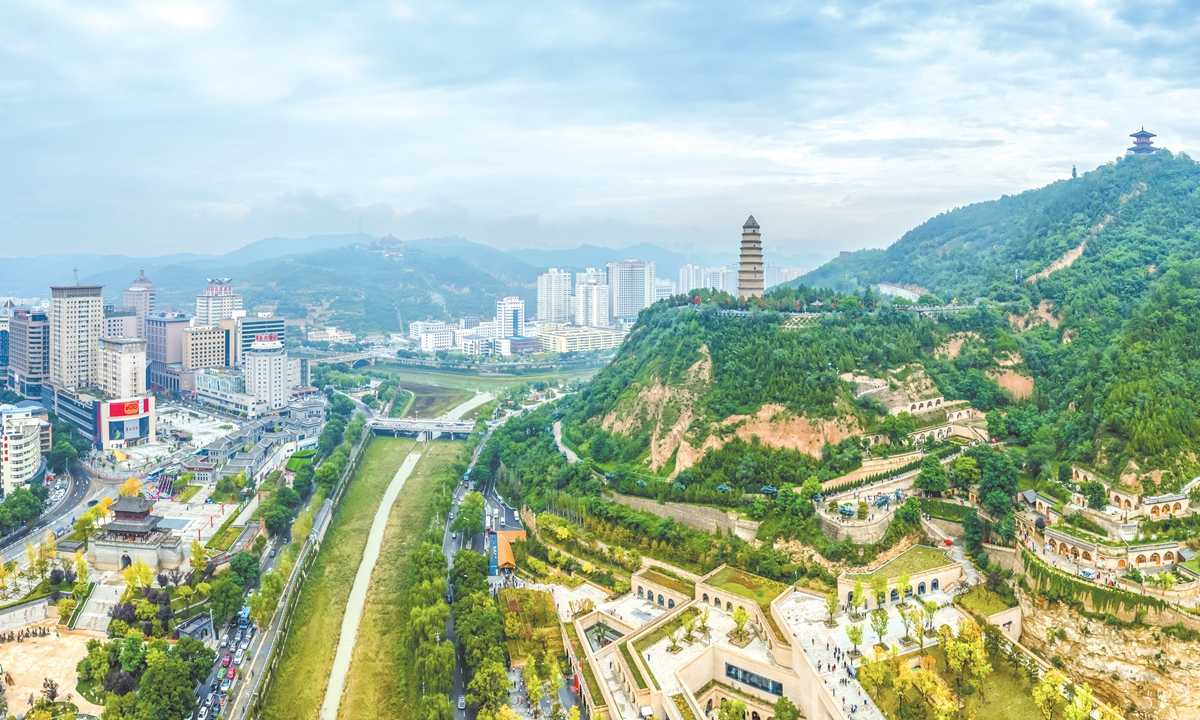
An aerial view of Yan'an, an old revolutionary base in Northwest China's Shaanxi Province. Photo: VCG
Editor's Note:
Chinese President Xi Jinping has pointed out, "to understand China today, one must learn to understand the Communist Party of China (CPC)." With the rapid development of China's economy and society, and the steady advancement of Chinese path to modernization, the notable achievements of the CPC have drawn extensive international attention and scholarly interest. Against this backdrop, the Global Times has launched the "CPC in Global Eyes" column, focusing on the feelings, perspectives, and insights of international friends from various fields regarding the CPC's historical path and achievements.
They include those who have toured China; deeply study CPC in academic fields; work, live, study, seek employment, or do business in various fields in China; and who, though having not visited China in person, pay close attention to the CPC's policies and trends. Through their vivid personal experiences, we aim to present a multifaceted overseas view of the CPC.
In the third installment of the series, we focus on Yan'an, a sacred place of the Chinese revolution and the cradle of New China in Northwest China's Shaanxi Province - where Edgar Snow, the US journalist who first made the CPC known to the world, conceived his world-renowned classic Red Star Over China based on months of firsthand observations and interviews with the CPC. We spoke with Eric Foster - Edgar Snow's nephew - to see how Snow family's descendants perceive the CPC, based on their continued connection and intergenerational observations of with China.
As the first Western reporter to enter Yan'an - which served as the CPC's headquarter from 1935 to 1948 - and the first to interview Chairman Mao Zedong and other CPC leaders, Edgar Snow provided a rare and firsthand account of China as opposed to the Kuomintang propaganda, challenging the world's misunderstandings and prejudices, with his reportage Red Star Over China based on extensive interviews and careful documentation he had conducted.
In the book, Snow painted a picture of a resilient, promising China led by CPC leaders possessing outstanding qualities, what later became known as the Yan'an Spirit - calling for firmness in correct political orientation, emancipation of the mind, seeking truth from facts, serving the people wholeheartedly, and developing self-reliance while encouraging pioneering efforts.
As a direct descendant of Snow, Foster has not only inherited a profound connection with China, but has also taken up the family mission of building bridges between China and the world. Foster said he has seen how the very spirit and qualities of the CPC, which his uncle so vividly documented in Yan'an, are being carried forward and illuminated in the present day, demonstrating their enduring relevance.

In Ganquan county, Yan'an, a winding path carries echoes of history. Rest stops and signs offer modern comfort, yet as the trail steepens, one feels transported to the 1930s - an era when the Red Army forged new bases through hardship and endurance.
This November, Eric Foster arrived there, setting foot on this very same path retracing his great-uncle Edgar Snow's journey to Yan'an - a return to "where his family's bond with China began."
From 1935 to 1948, the Shaanxi-Gansu-Ningxia Border Region centered around Yan'an was where the CPC Central Committee headquartered. It was in Yan'an where Party Central Committee and the Red Army kept fighting against Japanese forces invasion despite of military encirclement and economic blockade. Yan'an nourished the development of the CPC in strength, and supported the victory of the Chinese revolution. A generation of revolutionaries gathered in Yan'an amid relentless enemy blockades and harsh living conditions, tenaciously fought and steered the Chinese revolution from its low ebb to a historic turning point, paving the way for its eventual resurgence.
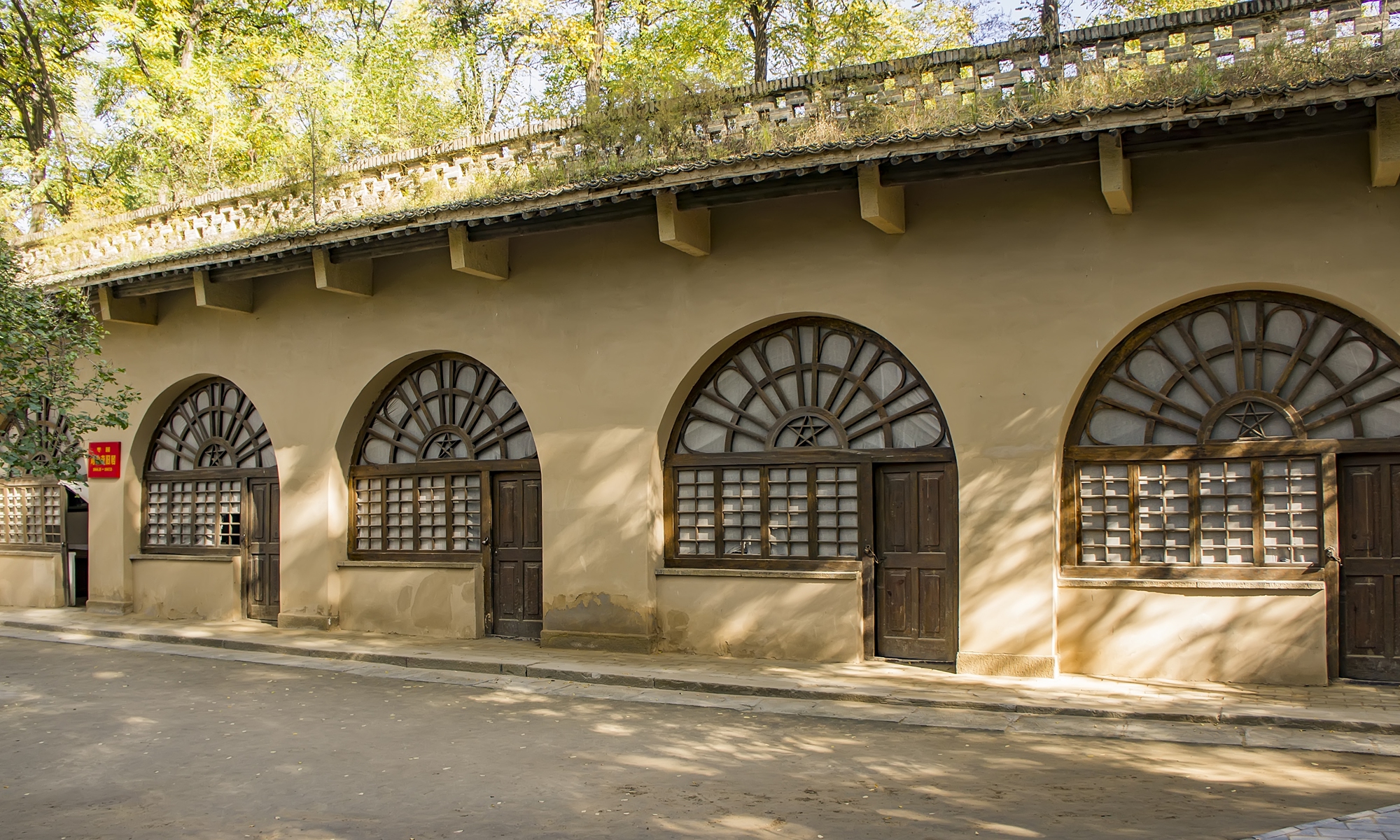
Following this historic path, Foster arrived at the Bao'an Revolutionary Site Memorial Hall in Zhidan county, a modest complex of cave dwellings, carefully preserved and maintained, that once served as Chairman Mao's former residence and the very place where Edgar Snow first met Mao.
It was precisely through the many nights of conversation in this cave room that Snow came to understand the CPC's policies - including a national united front against Japan, and the Chinese Soviet Government's diplomacy and many others. And it was also in Yan'an that Snow witnessed CPC's true essence - a rising political force committed to serving the people through hard work and self-reliance.
Running his hand over that small wooden, Foster reflected, "It is quite remarkable how simple life was. What came out of this simple room affected not only the history of China, but also the whole world."
From words to reality
Foster's visit to Yan'an is part of a documentary project that traces Snow family's ongoing dialogue with China. "This is a precious opportunity for me to contribute to telling the world China's real history, a history my family has been woven into across generations," he told the Global Times.
After visiting revolutionary sites, Foster felt that his understanding of the CPC from distant accounts was transformed into tangible reality.
Between 1941 and 1944, a large-scale production campaign transformed vast swathes of thorny no-man's land into productive terrain. The CPC-led local force converted wasteland into rice paddies, cave houses, and workshops, often using only rudimentary tools - or even their bare hands, according to the Xinhua News Agency.
"This miraculous achievement came through the CPC's hard work and self-reliance, which constitute an important part of the Yan'an Spirit," said Foster. He noted that Snow's book vividly captured this spirit, portraying the CPC leaders in Yan'an: Patched clothes, simple meals of millet and stir-fried potatoes with peppers, earthen beds, and broken glasses tied with strings.
In the Yan'an Revolutionary Memorial Hall, Foster also observed an exhibition panel recording the CPC's Yan'an-era code of conduct-the "Ten Nos," including banning corruption, profiteering, and prostitution. "Seeing these artifacts have given me a deeper understanding of why the Yan'an Spirit holds such significance for the CPC. Each item here authentically documents the Party's practical explorations during the Yan'an period, reflecting their hard struggle and their commitment to serving the people wholeheartedly, "said Foster.
He added, "The core value of the Yan'an Spirit is a fundamental requirement that enabled CPC members to persevere through hardship and lead the revolution from low tide to triumph. It remains a precious spiritual treasure of the CPC."
As a direct descendant of the Snow family, Foster has long been dedicated to promoting China-US cultural exchanges and narrating the true story of China and its ruling party to the world.
"When I was young, my mother often spoke of my famous uncle in China, so visiting became a dream. I've long tried to understand today's China, yet Western sources often offered only old images - blue uniforms and handcarts - so different from the modern Beijing I finally saw," Foster told the Global Times.
Now, having spent more than 10 years settling down in China, Foster has become the firsthand witness to the CPC's unwavering commitment to serving the people wholeheartedly and persevering with a self-reliant and hard-working entrepreneurial spirit while leading the nation's modernization drive.
From his experience, the nationwide poverty-alleviation campaign stands as the most powerful testament to the CPC's continued commitment to hard work and wholeheartedly serving the people.
"I live in Beijing and have seen its prosperity. It would be easy to focus only here, yet the Party dedicated immense effort to the rural front. Countless members worked in harsh conditions to develop local industries, ultimately lifting nearly 800 million people out of poverty. This is the Yan'an Spirit, alive today," he said.
"The Yan'an Spirit represents an important time of struggle in China's developing history," said Foster, noting that the CPC has preserved the spirit of hard work and self-reliance and passed it to next generations, turning it into a valuable spiritual asset that drives their continuous efforts.
To Foster and many other overseas scholars, upholding and carrying forward the spiritual legacy of the Yan'an revolutionary period remains a source of strength for the CPC in its continuous progress. "Yan'an played a key role in helping China to become the new China that we have today," Foster said.
After visting Yan'an, Foster deeply felt that those revolutionary memorial halls in Yan'an, together with many other patriotic-themed sites across China, has become a vivid window through which people from other countries can gain an authentic, multi-dimensional understanding of the CPC and China.
"For today's new generation of global visitors who want to discover China and understand the CPC without previous lens of preconception, these sites matter a lot," Foster told the Global Times. "Visitors are able to feel, in an almost immersive way, the CPC's consistent dedication into serving the people and sustained spirit of hard work and self-reliance, which rooted in the Yan'an period and the Yan'an Spirit, and continues to drive the Party forward today." -By Zhao Jingru , Global Times
Chinese President Xi Jinping has pointed out, "to understand China today, one must learn to understand the Communist Party of China (CPC)." With the rapid development of China's economy and society, and the steady advancement of Chinese path to modernization, the notable achievements of the CPC have drawn extensive international attention and scholarly interest. Against this backdrop, the Global Times has launched the "CPC in Global Eyes" column, focusing on the feelings, perspectives, and insights of international friends from various fields regarding the CPC's historical path and achievements.
They include those who have toured China; deeply study CPC in academic fields; work, live, study, seek employment, or do business in various fields in China; and who, though having not visited China in person, pay close attention to the CPC's policies and trends. Through their vivid personal experiences, we aim to present a multifaceted overseas view of the CPC.
In the third installment of the series, we focus on Yan'an, a sacred place of the Chinese revolution and the cradle of New China in Northwest China's Shaanxi Province - where Edgar Snow, the US journalist who first made the CPC known to the world, conceived his world-renowned classic Red Star Over China based on months of firsthand observations and interviews with the CPC. We spoke with Eric Foster - Edgar Snow's nephew - to see how Snow family's descendants perceive the CPC, based on their continued connection and intergenerational observations of with China.
An aerial view of Yan'an, an old revolutionary base in Northwest China's Shaanxi Province. Photo: VCG
"I want to do what my aunt and uncle did, which was to introduce China to the world. I need to write a book, telling the true history about China to help whoever reads it in America or other western countries to see the real China. This is what I've been doing for the last 12 or 13 years," Eric Foster, the nephew of Edgar Snow and Helen Snow, said in an interview with the Global Times.As the first Western reporter to enter Yan'an - which served as the CPC's headquarter from 1935 to 1948 - and the first to interview Chairman Mao Zedong and other CPC leaders, Edgar Snow provided a rare and firsthand account of China as opposed to the Kuomintang propaganda, challenging the world's misunderstandings and prejudices, with his reportage Red Star Over China based on extensive interviews and careful documentation he had conducted.
In the book, Snow painted a picture of a resilient, promising China led by CPC leaders possessing outstanding qualities, what later became known as the Yan'an Spirit - calling for firmness in correct political orientation, emancipation of the mind, seeking truth from facts, serving the people wholeheartedly, and developing self-reliance while encouraging pioneering efforts.
As a direct descendant of Snow, Foster has not only inherited a profound connection with China, but has also taken up the family mission of building bridges between China and the world. Foster said he has seen how the very spirit and qualities of the CPC, which his uncle so vividly documented in Yan'an, are being carried forward and illuminated in the present day, demonstrating their enduring relevance.
Eric Foster holds up the book Red Star Over China by his uncle Edgar Snow. Photo: Courtesy of Eric Foster
Old path, same spiritIn Ganquan county, Yan'an, a winding path carries echoes of history. Rest stops and signs offer modern comfort, yet as the trail steepens, one feels transported to the 1930s - an era when the Red Army forged new bases through hardship and endurance.
This November, Eric Foster arrived there, setting foot on this very same path retracing his great-uncle Edgar Snow's journey to Yan'an - a return to "where his family's bond with China began."
From 1935 to 1948, the Shaanxi-Gansu-Ningxia Border Region centered around Yan'an was where the CPC Central Committee headquartered. It was in Yan'an where Party Central Committee and the Red Army kept fighting against Japanese forces invasion despite of military encirclement and economic blockade. Yan'an nourished the development of the CPC in strength, and supported the victory of the Chinese revolution. A generation of revolutionaries gathered in Yan'an amid relentless enemy blockades and harsh living conditions, tenaciously fought and steered the Chinese revolution from its low ebb to a historic turning point, paving the way for its eventual resurgence.
Following this historic path, Foster arrived at the Bao'an Revolutionary Site Memorial Hall in Zhidan county, a modest complex of cave dwellings, carefully preserved and maintained, that once served as Chairman Mao's former residence and the very place where Edgar Snow first met Mao.
It was precisely through the many nights of conversation in this cave room that Snow came to understand the CPC's policies - including a national united front against Japan, and the Chinese Soviet Government's diplomacy and many others. And it was also in Yan'an that Snow witnessed CPC's true essence - a rising political force committed to serving the people through hard work and self-reliance.
Running his hand over that small wooden, Foster reflected, "It is quite remarkable how simple life was. What came out of this simple room affected not only the history of China, but also the whole world."
From words to reality
Foster's visit to Yan'an is part of a documentary project that traces Snow family's ongoing dialogue with China. "This is a precious opportunity for me to contribute to telling the world China's real history, a history my family has been woven into across generations," he told the Global Times.
After visiting revolutionary sites, Foster felt that his understanding of the CPC from distant accounts was transformed into tangible reality.
Between 1941 and 1944, a large-scale production campaign transformed vast swathes of thorny no-man's land into productive terrain. The CPC-led local force converted wasteland into rice paddies, cave houses, and workshops, often using only rudimentary tools - or even their bare hands, according to the Xinhua News Agency.
"This miraculous achievement came through the CPC's hard work and self-reliance, which constitute an important part of the Yan'an Spirit," said Foster. He noted that Snow's book vividly captured this spirit, portraying the CPC leaders in Yan'an: Patched clothes, simple meals of millet and stir-fried potatoes with peppers, earthen beds, and broken glasses tied with strings.
In the Yan'an Revolutionary Memorial Hall, Foster also observed an exhibition panel recording the CPC's Yan'an-era code of conduct-the "Ten Nos," including banning corruption, profiteering, and prostitution. "Seeing these artifacts have given me a deeper understanding of why the Yan'an Spirit holds such significance for the CPC. Each item here authentically documents the Party's practical explorations during the Yan'an period, reflecting their hard struggle and their commitment to serving the people wholeheartedly, "said Foster.
He added, "The core value of the Yan'an Spirit is a fundamental requirement that enabled CPC members to persevere through hardship and lead the revolution from low tide to triumph. It remains a precious spiritual treasure of the CPC."
A view of the Zaoyuan revolutionary site in Yan'an, Northwest China's Shaanxi Province Photo: VCG
Inherited spirit, continuous effortAs a direct descendant of the Snow family, Foster has long been dedicated to promoting China-US cultural exchanges and narrating the true story of China and its ruling party to the world.
"When I was young, my mother often spoke of my famous uncle in China, so visiting became a dream. I've long tried to understand today's China, yet Western sources often offered only old images - blue uniforms and handcarts - so different from the modern Beijing I finally saw," Foster told the Global Times.
Now, having spent more than 10 years settling down in China, Foster has become the firsthand witness to the CPC's unwavering commitment to serving the people wholeheartedly and persevering with a self-reliant and hard-working entrepreneurial spirit while leading the nation's modernization drive.
From his experience, the nationwide poverty-alleviation campaign stands as the most powerful testament to the CPC's continued commitment to hard work and wholeheartedly serving the people.
"I live in Beijing and have seen its prosperity. It would be easy to focus only here, yet the Party dedicated immense effort to the rural front. Countless members worked in harsh conditions to develop local industries, ultimately lifting nearly 800 million people out of poverty. This is the Yan'an Spirit, alive today," he said.
"The Yan'an Spirit represents an important time of struggle in China's developing history," said Foster, noting that the CPC has preserved the spirit of hard work and self-reliance and passed it to next generations, turning it into a valuable spiritual asset that drives their continuous efforts.
To Foster and many other overseas scholars, upholding and carrying forward the spiritual legacy of the Yan'an revolutionary period remains a source of strength for the CPC in its continuous progress. "Yan'an played a key role in helping China to become the new China that we have today," Foster said.
After visting Yan'an, Foster deeply felt that those revolutionary memorial halls in Yan'an, together with many other patriotic-themed sites across China, has become a vivid window through which people from other countries can gain an authentic, multi-dimensional understanding of the CPC and China.
"For today's new generation of global visitors who want to discover China and understand the CPC without previous lens of preconception, these sites matter a lot," Foster told the Global Times. "Visitors are able to feel, in an almost immersive way, the CPC's consistent dedication into serving the people and sustained spirit of hard work and self-reliance, which rooted in the Yan'an period and the Yan'an Spirit, and continues to drive the Party forward today." -By Zhao Jingru , Global Times