Share This

Friday, July 18, 2025

Manus AI's 'de-China playbook is a trap


Rebranding bid: The website for the Manus AI agent arranged on a computer in Hong Kong.Manus is doing everything it can to sever any ties to the mainland while its parent company Butterfly Effect reportedly eliminated all its China-based jobs last week. —Bloomberg


WHEN Chinese startup Manus previewed an artificial intelligence (AI) agent earlier this year, it went mega-viral. It came on the heels of DeepSeek, when global excitement over China’s AI breakthroughs was at a fever pitch, and nobody wanted to miss out on the next surprise hit.

Now, Manus is doing everything it can to sever any ties to the mainland. It relocated its headquarters to Singapore, and its three co-founders have made the move abroad as well.

Butterfly Effect, the company behind Manus, reportedly eliminated all its China-based jobs last week.

It has also scrubbed content from domestic social media platforms Weibo and Xiaohongshu (also known as RedNote), despite maintaining an active presence on X.

Users in China trying to access the site this week were met with the message that it’s “not available in your region,” a departure from a previous memo stating that the Chinese version was under development.

It’s the choice these tech firms are forced to make in the current geopolitical climate: stay in the hyper-competitive domestic market or go for more lucrative growth overseas. You can’t have both.

Moving abroad means going through the arduous process of trying to “de-China” the company’s origins.

It’s a shame given this background is what drove so much hype about Manus in the first place.

Chinese firms have also traditionally had an edge in consumer tech, with access to a vast pool of affordable engineering talent and a hardworking culture. Plus, dubious identity rebrands almost never work.

Manus’ decision to recast as a Singapore company follows the furore that emerged in the United States after prominent Silicon Valley venture capitalist (VC) firm Benchmark (an early backer of the likes of eBay Inc and Uber Technologies Inc) announced it was leading a US$75mil funding round in Butterfly Effect.

Fellow VCs accused Benchmark of “investing in your enemy” and equated it to backing Russian efforts during the space race.

The plans have also come under US Treasury Department scrutiny over new rules related to investments in certain Chinese technology.

It will be very hard for Manus to ever rid the China label from its story, especially after all the attention it received.

Co-founder Ji Yichao was on the cover of Forbes China more than a decade ago, as one of the 30 under 30 entrepreneurs in the country. State-backed mouthpieces have also celebrated Manus’s rise, so trying to cleanse its Chinese-ness risks domestic backlash.

It’s not the first time this has happened. ByteDance Ltd’s TikTok has gone to great pains to rebrand as an American and Singaporean company and assuage Washington’s fears about its Beijing origins. But none of this stopped the United States from passing a law last year requiring the parent company to divest from the app that doesn’t even operate in the mainland, or be banned due to perceived national security concerns. This doesn’t bode well for Manus.

The AI sector has become a lightning rod for China hawks in the United States, who view any consumer-facing application using the tech from its geopolitical nemesis as a threat.

AI video startup HeyGen Inc garnered investment and a raft of US customers after making the move from China, yet was still singled out by lawmakers over potential ties to the Communist Party.

Its co-founder said it’s been “disappointing” to see his heritage treated as something he should “be ashamed of.”

Wrapped up in national security worries is more than a hint of xenophobia.

Targeting consumer tech firms based on the national origins of their founders is an ineffective strategy.

US concerns about potential threats that data could leak to China or that the CCP could influence algorithms should implement more comprehensive rules to mitigate these risks.

When it comes to buzzy new technology like the Manus AI agent, industry-wide standards are overdue.

Tools that are designed to allow software to take on increasingly complex tasks on their own carry unique risks, including who is liable when things go awry and how much control should be ceded to machines.

Global policymakers should address these concerns regardless of where the AI agent comes from.

Icing out the best and brightest tech minds risks leaving Silicon Valley blind to innovation happening elsewhere. It’s in America’s interest to do more to support these founders by bringing their talents and breakthroughs to the United States. —Bloomberg

By Catherine Thorbecke,  is a Bloomberg Opinion columnist covering Asia tech. The views expressed here are the writer’s own.

CAP Calls for Vacancy Tax and Tighter Controls to Curb Property Speculation


The Consumers Association of Penang (CAP) strongly supports the introduction of a vacancy tax on residential properties that are left unoccupied for extended periods. We believe this measure is urgently needed to address the deepening problems of property speculation and declining housing affordability in Malaysia.

A vacancy tax typically applies to properties that remain vacant — unsold or unrented — for more than six months in a year. In countries such as Canada and Australia, particularly in cities like Melbourne, this tax is set at between one and three per cent of the property or land value. Its primary aim is to deter property speculation, particularly in the medium-cost segment, where rising prices in the subsale market have increasingly placed home ownership beyond the reach of middle-income earners.

According to the Khazanah Research Institute, housing prices in Malaysia rose by an average of 5.8 per cent per year between 2010 and 2022 — well above the healthy growth range of three to four per cent. As a result, many in the M40 income group find it difficult to purchase their own homes. In urban areas, the typical ‘modern’ three-bedroom apartment ranges from 800 to 1,000 square feet. This limited space is not conducive to multi-generational or extended family living, nor does it offer adequate privacy or comfort for those forced to share with other families.

Speculators often compete directly with genuine homebuyers, inflating demand and thereby encouraging developers to acquire more land to keep up with what is essentially artificial pressure. In land-scarce areas like Penang, this has resulted in a rise in land prices and a growing reliance on costly land reclamation from the sea.

It is also worth noting that many apartment blocks are not fully occupied, despite having been sold. In these developments, owners of vacant units — who are not living in them and cannot easily sell or rent them out — often neglect their obligations to pay maintenance fees. This undermines the upkeep of the building and penalises residents who do live there.

At present, many residential properties, particularly in urban centres, remain empty while thousands of Malaysians continue to struggle to find homes they can afford. The property market has become increasingly dominated by those who treat housing as a speculative investment rather than a basic human need. This trend has led to inflated prices and a false sense of scarcity, especially in cities where housing demand is greatest. A vacancy tax would act as a strong disincentive to leave properties idle and would encourage owners to either rent out or sell them, returning more units to the active housing market.

In addition to the vacancy tax, CAP calls on the government to review and strengthen the Real Property Gains Tax (RPGT). The current system fails to adequately discourage short-term speculation. We propose a more progressive model that imposes significantly higher tax rates on profits from properties sold within a short holding period.

We also urge a revision of stamp duty rates, with higher charges levied on the purchase of second and subsequent residential properties. These measures should be especially firm in cases where the property is not intended for owner-occupation, or when purchased by foreign buyers. In doing so, the government can help ensure that Malaysians are not priced out of home ownership by those seeking to profit from housing as an asset.

Moreover, CAP recommends tighter controls on housing loans. Banks and financial institutions should apply stricter lending criteria for individuals who already own multiple residential units. Loan-to-value ratios should be lowered in such cases to reduce excessive borrowing for speculative purposes.

Unless the government introduces comprehensive policy reforms, Malaysia’s housing sector will continue to favour investors at the expense of ordinary citizens. It is the government’s duty to uphold the principle that housing is a fundamental right, not a speculative commodity.

CAP therefore urges policymakers to act with urgency and resolve. The combined approach of introducing a vacancy tax, strengthening RPGT, revising stamp duties, and tightening housing loan regulations will go a long way towards restoring balance, fairness and accessibility in the property market.

 Mohideen Abdul Kader

President
Consumers Association of Penang

Tuesday, July 15, 2025

Malaysia-NZ trade set to soar


 AUCKLAND: Trade between Malaysia and New Zealand is expected to increase by 50% in the next five years, says Datuk Seri Dr Ahmad Zahid Hamidi.

The Deputy Prime Minister said forging closer bilateral and trade ties with New Zealand was more crucial now in light of the changing global landscape.

“Our shared target to increase Malaysia-New Zealand trade by 50% by 2030 is not only achievable but necessary in a world where regional resilience matters more than ever,” he said during the Asean-New Zealand Business Council Engagement session held here yesterday.

He said trade agreements such as the Malaysia-New Zealand Free Trade Agreement (MNZFTA) and Asean, Australia, New Zealand Free Trade Area (AANZFTA) serve as a catalyst for boosting bilateral trade.

In 2024, he said the trade volume reached RM10.72bil (US$2.34bil), making Malaysia New Zealand’s second-largest trading partner within Asean.

“These numbers aren’t just statistics; they reflect confidence, connectivity and commitment between our economies,” added Ahmad Zahid, who is in New Zealand for a five-day working visit.

He said the MNZFTA also enabled 99.8% of New Zealand’s exports to enter Malaysia duty-free, with the AANZFTA also increasing exports to Asean by nearly 60% since 2010.

Anwar advances Malaysia's diplomatic agenda

“The AANZFTA is working well and should continue to be strengthened. Malaysia has also doubled its usage of AANZFTA benefits, from RM5.8bil in 2016 to RM12.9bil in 2023,” he added.

With the recent upgrade to AANZFTA and the momentum created through the Regional Comprehensive Economic Part­nership (RCEP), Ahmad Zahid said that both nations were better positioned to build a fair, modern and sustainable trade architecture.

AANZFTA, a trade agreement between Asean member states, Australia and New Zealand, came into force in 2010 and is a key pillar in both nations’ ties with South-East Asia.

The upgrade of AANZFTA came into force on April 21 this year to further reduce export barriers while boosting trade in the region.

Ahmad Zahid said Malaysia was looking at three key areas – sustainability, digital transformation and food security – to deepen trade collaboration between the two countries.

“New Zealand, with 87% of its electricity sourced from renewables, is a leader in green transition. This aligns closely with Malaysia’s commitment to achieving net-zero emissions by 2050.

“There is vast space for cooperation in clean energy, carbon markets and low-carbon technology,” he added.

On Malaysia’s part, Ahmad Zahid said the MyDigital agenda complements New Zealand’s strengths in ICT (information, communication and technology), offering opportunities for joint ventures in AI, smart cities, cybersecurity and digital trade governance.

“The agri-food sector also offers enormous potential. As Asean’s middle class grows and consumption patterns shift, New Zealand’s reputation for quality, traceability and innovation fits well with Malaysia’s strengths in halal certification and regional logistics.”

Ahmad Zahid, who is also Rural and Regional Development Minister, said it was crucial that the bilateral economic partnership continues to be grounded in human connection. 

“Thousands of Malaysian students have studied in New Zealand and tourism between our nations continues to thrive. 

“These exchanges are not just heartwarming, they are the glue that holds economic ties together, builds trust and creates long-term understanding,” he added.

On economic growth between New Zealand and Asean, Ahmad Zahid said it must be inclusive of micro, small and medium-scale enterprises (MSMEs) so that the latter was not left behind.

To achieve this, he said it must entail improving access to trade finance, digital tools, and capacity building between Asean member states and New Zealand.


https://www.google.com/url?sa=t&source=web&rct=j&opi=89978449&url=https://www.thestar.com.my/news/nation/2025/07/15/malaysia-nz-trade-set-to-soar&ved=2ahUKEwjIpp_f-76OAxUtV2wGHRqjAeoQFnoECC8QAQ&sqi=2&usg=AOvVaw1p1isHv2xpXHfE4pxMMpRa

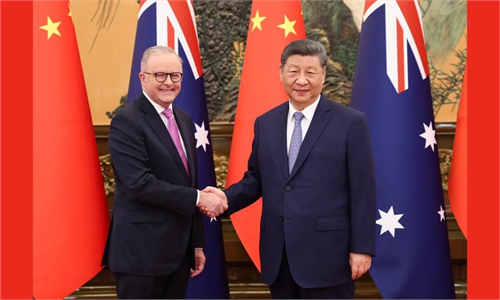
China, Australia strengthen green energy, tourism cooperation during Albanese’s official visit


China Australia photo: VCG

Australian mining and metals multinational BHP Group on Monday announced cooperation with Chinese leading battery manufacturers Contemporary Amperex Technology Co Ltd (CATL) and BYD to accelerate its electrification of mining operations, as China and Australia eye strengthened cooperation during Australian Prime Minister Anthony Albanese's ongoing visit to China.

Melbourne-based BHP said it has signed memoranda of understanding (MoUs) with CATL and FinDreams Battery Co, a fully owned subsidiary of BYD Group, to collaborate on battery development for mining equipment and locomotives including rapid charging infrastructure, as well as energy storage and battery recycling, according to two separate press releases on its website.

The moves come as Albanese is on an official visit to China. According to the Australian Financial Review, top executives from BHP, Rio Tinto, Fortescue and Hancock Prospecting are among scores of business delegates travelling with Albanese.

Speaking before a meeting between Australian iron ore miners and Chinese steelmakers in Shanghai on Monday, Albanese framed green steel as a way to grow Australia and China's decades-long trade relationship, Reuters reported.
"Achieving the goal of the Paris Agreement would require the decarbonization of steel value chains, presenting an opportunity for Australia and China to progress our long-term economic interests," he was quoted as saying.

"Rio Tinto is working closely with our Chinese customers to support the development of low-carbon steelmaking technologies, leveraging Australia's high-quality iron ore and China's manufacturing expertise to drive real progress on emissions reduction," Kellie Parker, Rio Tinto Australia chief executive, told the Global Times on Monday. 

"This visit is a valuable opportunity to deepen collaboration between suppliers and steelmakers. We welcome the opportunity to participate in these discussions alongside the Prime Minister," Parker said.

China has been taking concrete steps toward its commitment to peak carbon emissions before 2030 and achieve carbon neutrality before 2060. Over the years, the country has made remarkable progress in clean energy development, emerging as a global leader driving both domestic decarbonization and international sustainable development.

China and Australia have sound cooperation in traditional energy fields such as natural gas and coal, and green energy is an emerging field that has enormous room for cooperation, Ning Tuanhui, an associate research fellow at the China Institute of International Studies, told the Global Times on Monday.

"Australia has abundant deposits of minerals including lithium, cobalt and rare earths, while China has technological advantages and rapid development in the new-energy industry. Given their complementarity, strengthened green energy cooperation is beneficial to both sides," Ning said, noting that China is a critical partner for Australia to boost energy transition and address climate challenges.

In addition to energy, Albanese also reportedly highlighted tourism and sporting ties with China during his visit - his second official visit to China but the first since his re-election in May. On Sunday in Shanghai, Albanese visited the headquarters of Chinese online travel platform Trip.com and witnessed the signing of an agreement between Tourism Australia and Trip.com, according to information the platform sent to the Global Times on Monday.

Video footage posted by ABC News also showed that on Sunday, Albanese took part in a morning workout at the iconic Shanghai Bund, accompanied by Shanghai Port FC's Australian coach Kevin Muscat, team captain Wang Shenchao and others. He was presented with a special commemorative jersey.

Amid increasingly stabilizing and improving ties between China and Australia over the past three years under the strategic guidance of the leaders of the two countries, Albanese's visit to China marks a pivotal step in further advancing bilateral economic and trade relations, Song Wei, a professor at the School of International Relations and Diplomacy at Beijing Foreign Studies University, told the Global Times on Monday.

China has been Australia's largest trading partner, export destination and source of imports for 16 consecutive years. The China-Australia Free Trade Agreement, which came into effect in 2015, has significantly boosted trade, with total trade surpassing $210 billion in 2024, according to an article by Chinese Ambassador to Australia Xiao Qian published by the People's Daily on Sunday. 

Strengthening dialogue, expanding the scope of economic cooperation and increasing people-to-people exchanges will bring more tangible benefits to bilateral cooperation, Song said.

"Given the complex and volatile geopolitical landscape, frequent high-level exchanges like this visit are needed to build mutual trust and strengthen the resilience of bilateral relations," Ning said.


Repated posts:


RELATED ARTICLES

Saturday, July 12, 2025

BE LABEL-SAVVY TO STAY HEALTHY for organic food among health-conscious consumers


PETALING JAYA: The multi-billion-­ringgit global organic food and beverage market is expected to grow more by 2030, according to market research firm Grand View Research.

For Malaysia, there is a growing appetite for organic food among health-conscious consumers.

CLICK TO ENLARGECLICK TO ENLARGE

But how do people know whether the “organic” foodstuff they buy are truly organic?

An important source is the myOrganic sticker that is usually found on the packaging of organic foodstuff sold at shops.

The myOrganic certification scheme is used to promote, implement and facilitate the adoption of organic agriculture, explains Agriculture Department (DOA) director-general Datuk Nor Sam Alwi.

“This certification scheme covers various organic activities, including fresh produce farming, beekeeping, the breeding of organic plant varieties and wild harvesting.

ALSO READ: Verifying food markers not quite an organic process

“The Malaysian Organic Certification Scheme is now known as myOrganic,” she said in in a statement to The Star.

To safeguard the authenticity of certified organic products, the regulation of organic items is primarily governed under the Food Act 1983 and Food Regulations 1985, overseen by the Health Ministry, she added.

The Agriculture and Food Security Ministry has also registered the myOrganic certification logo with the Intellectual Property Corporation of Malaysia (MyIPO) as a legitimate trademark.

“If the DOA receives complaints about the misuse of this logo, the matter will be referred to the Domestic Trade and Cost of Living Ministry for further investigation.

“In cases where fraud is confirmed, the offending company may be prosecuted under the Trademarks Act 2019,” she said.

Upon conviction, offenders may face a fine of up to RM10,000 per item bearing the misused trademark, imprisonment of up to three years or both.

ALSO READ: How bugs help you spot organic durians

Nor Sam said the department has issued guidelines to certificate holders outlining the terms and conditions for the use of the myOrganic logo.

“However, we also rely on the cooperation of consumers to address the risks of fraud and logo misuse by lodging complaints where appropriate.

“Matters related to processing, repackaging or importation of organic products fall strictly under the jurisdiction of the Health Ministry,” she said.

To create awareness, the department is actively carrying out promotional activities targeting consumers through physical events and social media platforms, as well as by engaging with local organic associations.

“These initiatives focus on promoting Good Agricultural Prac­tices (GAP), highlighting the importance of recognising the myOrganic logo, encouraging the purchase of certified farm produce.

“Additionally, consumers can verify the validity of organic certification by visiting the DOA website at www.doa.gov.my under the list of certified recipients,” she said.

Dr Juju Nakasha Jaafar, senior lecturer at the Faculty of Agri­culture at Universiti Putra Malay­sia, said there has been confusion on the authenticity of organic products.

“For example, a seller might claim he is selling pesticide-free or chemical-free vegetables, which gives consumers the impression that the products are organic.

“In reality, these vegetables may be free from chemical pesticides but are still grown using chemical fertilisers and thus do not qualify as organic,” she said.

“For vegetables to be certified as organic, all input must be completely natural.

“This includes compost fertilisers, organic pesticides and non-genetically modified organism seeds.”

These are outlined in the myOrganic certification guidelines.

“Consumers can look for the myOrganic logo on vegetable products to ensure they are truly organic.

“The DOA strictly regulates this certification,” she said, adding that more details can be found on the DOA website.

Federation of Malaysian Consumers Associations (Fomca) secretary-general Dr Saravanan Thambirajah said traders must verify the certification documents provided by suppliers before selling or labelling any product as organic.

“They should only use the term ‘organic’ when backed by certification,” he said.

Saravanan said consumers should look for official certification logos on packaging and not rely solely on general claims like ‘natural’.

“If you suspect a product is being falsely marketed as organic, you should report it to the Domestic Trade and Cost of Living Ministry or lodge a complaint with Fomca,” he added.--

By KHOO GEK SANDIVYA THERESA RAVIRAGANANTHINI VETHASALAM

https://www.thestar.com.my/news/nation/2025/07/12/be-label-savvy-to-stay-healthy

Friday, July 11, 2025

China, ASEAN vow co-op amid global challenges

Partnership a crucial pillar for regional, world devt, stability: expert


Chinese Foreign Minister Wang Yi joins hands with ASEAN foreign ministers for a group photo during the ASEAN Post-Ministerial Conference with China at the Kuala Lumpur Convention Centre in Kuala Lumpur, Malaysia on July 10, 2025. Photo: VCG

China and ASEAN foreign ministers reaffirmed their wish for further cooperation and joint efforts to maintain regional peace and stability on Thursday during the China-ASEAN Foreign Ministers' Meeting held in Kuala Lumpur, Malaysia. Analysts believe that China-ASEAN cooperation has now become a crucial pillar for regional as well as global development and stability, especially amid the US' sweeping and coercive series of tariffs. 

China has always been the most reliable stabilizing force in a turbulent world and the most dependable partner for ASEAN members to address challenges, Chinese Foreign Minister Wang Yi said on Thursday at the meeting in the Malaysian capital. 

Noting that China and ASEAN share similar development concepts, common demands and integrated interests, Wang said that China regards ASEAN as a priority direction for neighborhood diplomacy and a pioneer area for promoting the building of a community with a shared future for mankind.

Wang also a member of the Political Bureau of the CPC Central Committee, briefed the achievements of China-ASEAN cooperation and put forward four proposals.

Wang said that China is willing to work with ASEAN countries to practice open regionalism and true multilateralism and make greater contributions to regional and global governance.

In terms of win-win cooperation, Wang said that China is willing to work with ASEAN to build China-ASEAN Free Trade Area 3.0, implement the Regional Comprehensive Economic Partnership Agreement to a high quality, and create a high-level free trade network.

While stating that China is willing to take the lead in signing the Protocol to the Treaty on the Southeast Asia Nuclear Weapon-Free Zone, Wang stressed that the South China Sea is the common home of regional countries, rather than a "gladiatorial arena" for major powers. 

China is willing to expand cooperation with ASEAN members in areas such as marine environmental protection, navigation safety, maritime law enforcement and key marine infrastructure, fully implement the Declaration on the Conduct of Parties in the South China Sea, and advance consultations on the Code of Conduct (COC) in the South China Sea, Wang said. 

China is willing to continue to advocate dialogue, exchanges and mutual learning among different civilizations with ASEAN countries, Wang said.

The participating countries said that China has always been one of the most important dialogue partners of ASEAN, and they are willing to accelerate the alignment of development strategies with China, and cooperate under the Belt and Road Initiative at a high quality, according to the release from the Chinese Foreign Ministry. 

They also said that they are willing to work with China to safeguard multilateralism and the multilateral trading system and jointly address global challenges, further strengthen unity and cooperation with China, jointly advance the modernization process in Asia, and promote regional peace, stability and prosperity.

"The China-ASEAN relationship is now a vital pillar for regional as well as global development and stability," Luo Yongkun, a researcher at the Institute of International Studies of the Shanghai Academy of Social Sciences, told the Global Times on Thursday. 

Against the backdrop of tense major power relations and the impact of the US tariff war on regional development, the numerous consensuses reached between China and ASEAN on cooperative development and maintaining regional peace and stability align with the aspirations of all parties, marking a significant outcome of this foreign ministers' meeting, Luo noted. 

According to the Chinese Foreign Ministry, participants said they appreciate China's willingness to take the lead in signing the Protocol to the Treaty on the Southeast Asia Nuclear Weapon-Free Zone, and look forward to the early conclusion of the COC in the South China Sea by all parties. 

Ge Hongliang, Vice Dean of the ASEAN College at Guangxi Minzu University, told the Global Times that China and ASEAN have a shared vision for implementing denuclearization and the peaceful use of nuclear resources in Southeast Asia.

According to the expert, China's willingness to take the lead in signing [Protocol to the Treaty on SEAWFZ] demonstrates Beijing's support for ASEAN-led regional governance frameworks, which is of great significance to maintaining regional security order, particularly nuclear safety.

In addition, the positive stance of ASEAN countries on the South China Sea issue is conductive to establishing a platform for dialogue and communication between China and Southeast Asian nations on South China Sea matters, enhancing mutual trust, Ge added. 

US Secretary of State Marco Rubio met counterparts in Southeast Asia on Thursday during his first visit to the region since taking office, according to Reuters. 

It comes as the US government rolls out higher tariffs against Southeast Asian nations. Washington has announced plans for tariffs on Malaysia and five other ASEAN countries, with Malaysia facing a 25 percent tariff, Laos and Myanmar 40 percent, Cambodia and Thailand 36 per cent, and Indonesia 32 percent, starting from August 1, the Straits Times reported. 

Addressing the opening of the China-ASEAN Foreign Ministers' Meeting, Malaysia's Foreign Minister Datuk Seri Mohamad Hasan hailed the enhanced China-ASEAN economic cooperation, saying that the signing of the ACFTA 3.0, which is scheduled for later this year, comes at an opportune moment, according to Malaysian national news agency Bernama.

China and ASEAN remain dedicated to deepening ties and advancing regional cooperation, actively promoting the development of industrial chains that enhance regional stability, and bolstering the resilience of regional trade and investment, so as to counter the trade coercion and unilateralism from Washington, said the expert. 

In 2024, China and ASEAN had already been each other's largest trading partner for the fifth consecutive year, the Xinhua News Agency reported. Official data shows that the zero-tariff coverage rate between China and ASEAN has remained at above 65 percent. In 2024, bilateral trade in goods reached $982.34 billion, a year-on-year growth of 7.8 percent.

"Southeast Asian countries have many grievances against the US, perceiving its tariffs as a means of geopolitical coercion," Luo said, "While China's consistent and robust economic growth provides regional countries with confidence and stability."- Global Times